





- 07.04.2026 08:33
Russian doctors in the Balkans: lecture on memory and brotherhood at TulSU
An unusual lecture was held at Tula State University. It gathered students, teachers and everyone who cares about the fate of Russian-Serbian relations.
The organizers were the Russian-Balkan Business Cooperation Center, the Russian-Balkan Dialogue project and the Department of State History and Law.
The guest lecturer was Vladimir Nikolayevich Kulik, a doctor and writer. The topic he chose is rarely heard in lecture halls: "Russian medical missions in Serbia during the Balkan Wars and the First World War."
Kulik began with the Balkan Wars of 1912-1913. At that time, Russia and Serbia were allies in the struggle against the Ottoman Empire, but if the armies fought with bayonets, then the Russian sisters of mercy and doctors fought with scalpels and prayer. Volunteers came to Serbia: graduates of medical faculties, sisters of the Red Cross communities, people for whom helping Orthodox brothers was not a policy, but a duty.
When the First World War began (1914-1918), the scale of aid increased many times. The lecturer recalled the figure: of the 59 independent states of that time, 38 joined the war. Serbia was at the epicenter. Its army was bleeding, typhus was mowing down the civilian population, and Austro-Hungarian troops were occupying the cities. Under these conditions, Russian medical missions became a real miracle - they worked in the hospitals of Nis, Belgrade, and in field hospitals under fire.
One of the most poignant pages of the lecture was the story about Daria Alexandrovna Korobkina. She was only 26 years old. On October 2, 1914, she died — Kulik called the exact circumstances, tragic and heroic at the same time.
Vladimir Nikolayevich showed a photo taken on October 2, 2025 at the Russian House in Belgrade. The photo shows the ceremony of awarding the Serbian Medical Prize named after Daria Korobkina. Serbian doctors receive an award named after a Russian girl 111 years after her death. "That's what real memory means," the lecturer commented. "Not a memorial plaque, but a living cause."
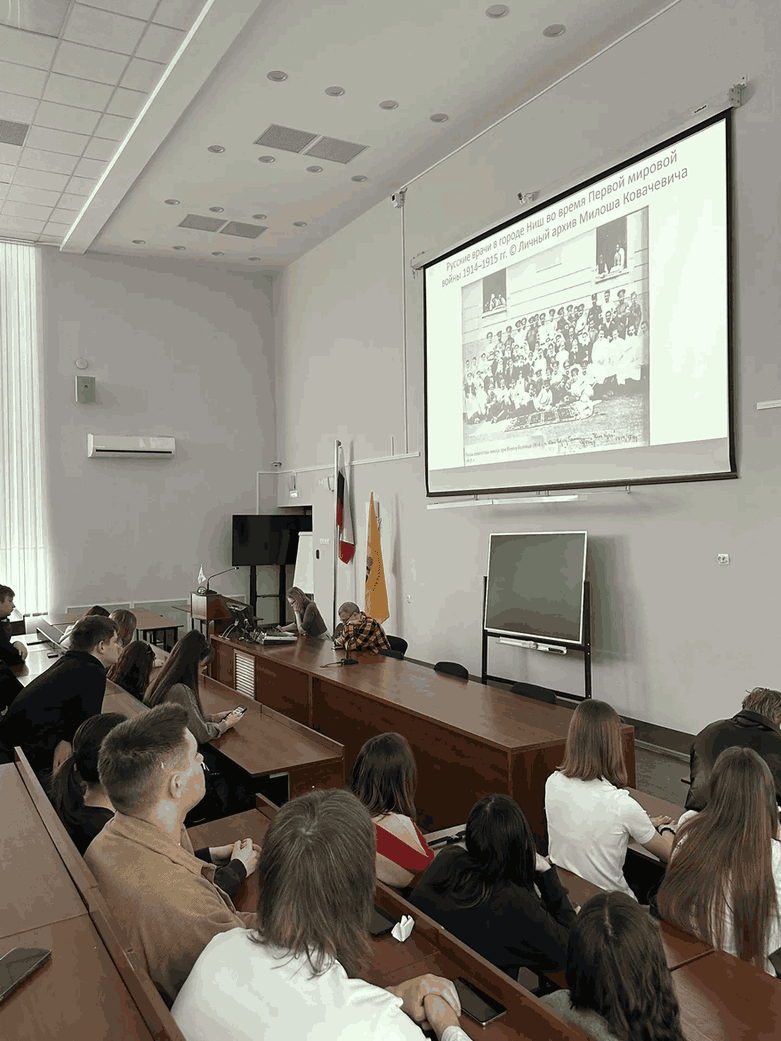
The audience saw a rare photo: Russian doctors in Niche (1914-1915). A group of medics in military jackets - without pathos, without pose. Just people who came to save strangers. The other slide was the Serbian Medical Society. There is a plaque on this building with the years: 1912-1917. Kulik explained that after the 1917 revolution, organized aid from Russia stopped, but many Russian doctors remained in Serbia forever, joining the local medicine.
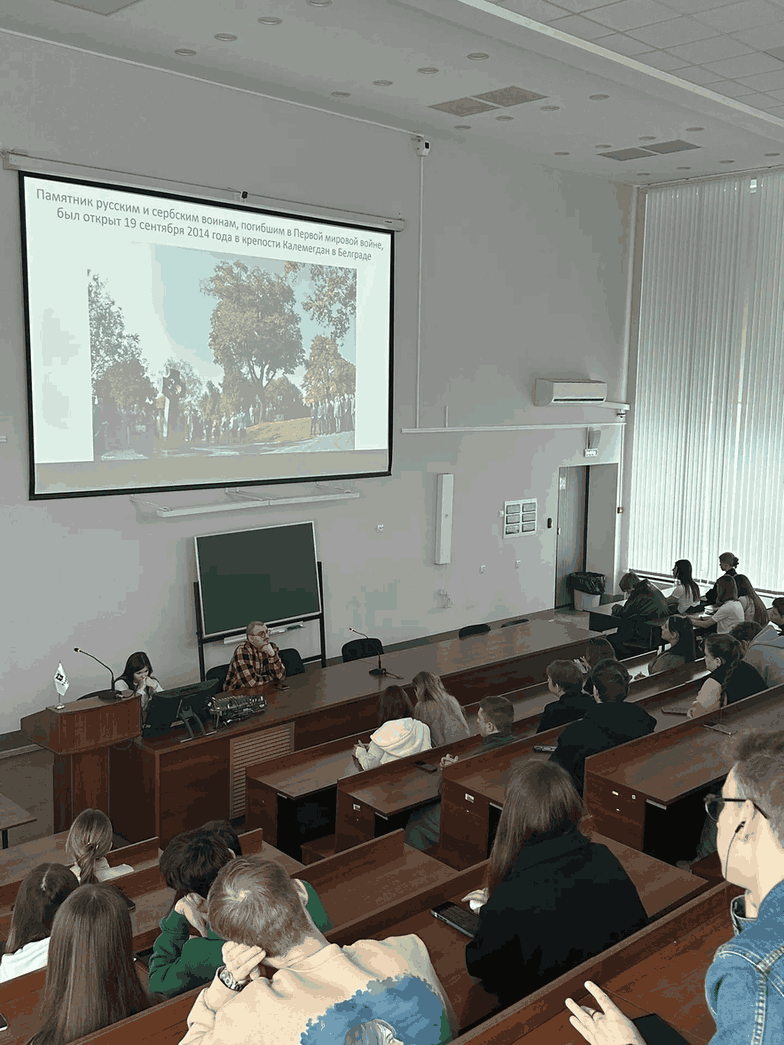
The lecture culminated with a story about a monument to Russian and Serbian soldiers who fell in the First World War. It was opened on September 19, 2014 in Belgrade's Kalemegdan fortress. The lecturer noted: "The monument appeared exactly one hundred years after the start of the war. This is a sign that the Serbs have not forgotten who was with them in the most terrible hour."
Vladimir Nikolayevich urged the audience not to limit themselves to one-time memorial events. "- Today we heard a story," he said in conclusion. “ - Tomorrow, each of you can tell it to your friends. The day after tomorrow someone may write an article. Memory is not just about monuments. Memory is our words and deeds."
The lecture ended with thunderous applause. The organizers have promised that meetings with Vladimir Kulik will become regular - this topic finds too lively a response among young people.